July 5, 2024
Embracing Imperfection in Photography: What I Shared at a Photographer’s Retreat
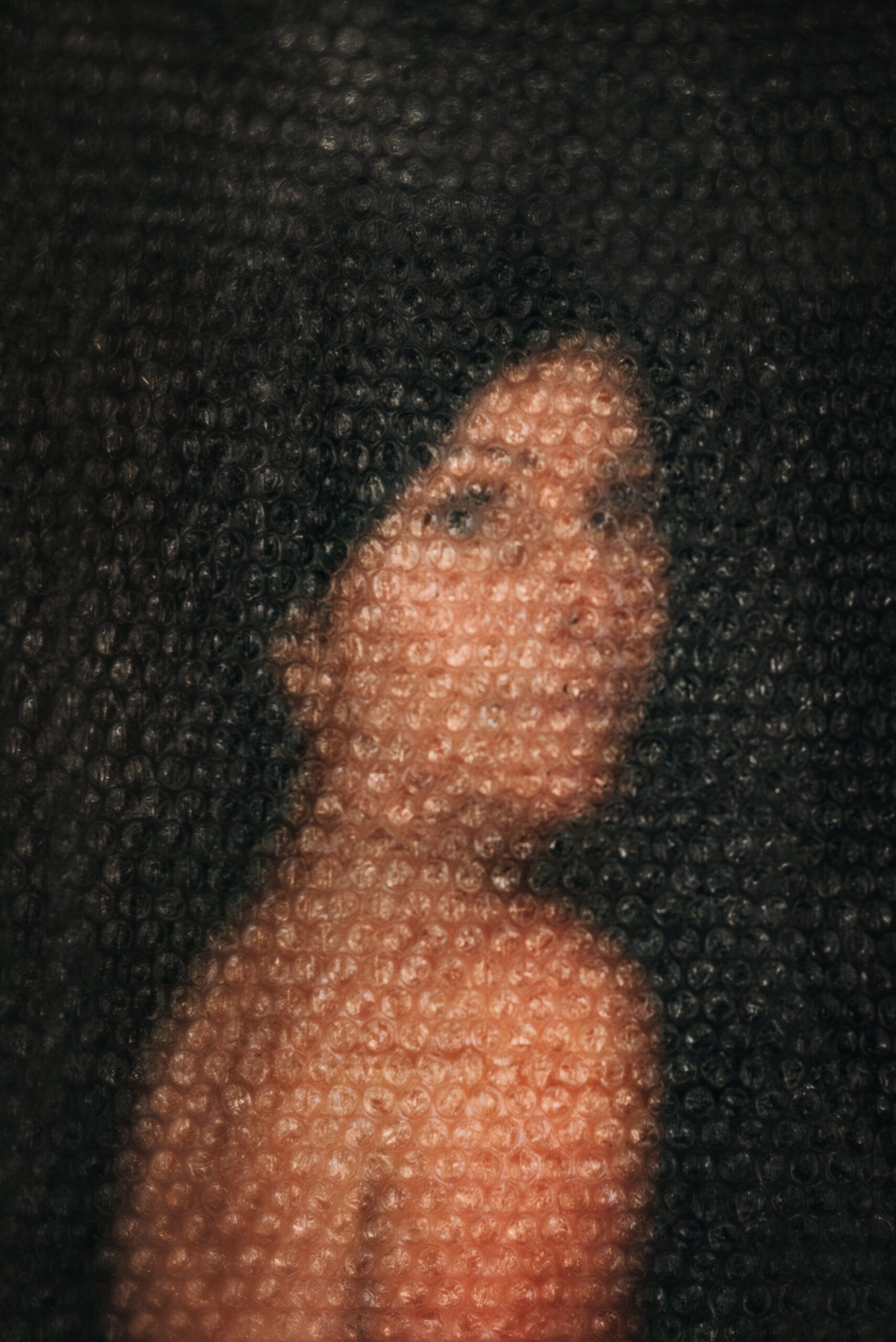
There is a difference between a photograph being technically imperfect and a photograph being unsuccessful.
Blur can be intentional. Distortion can contribute to the composition. A reflection may obscure part of the frame and still make the image stronger. Sometimes the thing we would normally try to correct is exactly what gives a photograph its character.
That idea — imperfection in photography as a deliberate creative choice — became the center of one of the most memorable experiences of my career: my first speaking engagement, at the Elena S Blair Mastermind Retreat in Brooklyn, New York.
I stood in front of 78 photographers and demonstrated a live self-portrait session using a Lensbaby Velvet 56, bubble wrap, natural light, and a willingness to let the process be less controlled than usual.
The funny part is that I was talking about imperfection while feeling intensely aware of my own.
That morning, I had cried in the shower because I was so nervous.
Then I walked into the room and did it anyway.

My First Photography Speaking Engagement
I had never spoken in front of a group like that before.
There is a big difference between experimenting with a self-portrait when you are alone and doing it while a room full of photographers watches the entire process unfold. At home, you can change your mind, abandon the idea, adjust something twenty times, or quietly decide the experiment simply did not work.
A live demonstration removes most of that safety net.
There were 78 people in the room. I was nervous enough that morning to cry before I even arrived, and then I had to stand in front of everyone, explain what I was doing, photograph myself, and trust that something worthwhile would come from it.
That ended up being strangely appropriate.
The point was never to demonstrate how to make a flawless photograph.
It was to show what can happen when you stop treating every unpredictable element as a problem to eliminate.


What Imperfection in Photography Actually Means
When I use the word imperfection here, I am not talking about flaws in the person being photographed.
I mean visual and technical elements that fall outside the conventional idea of a clean, perfectly controlled image: softness, motion, blur, distortion, flare, obstruction, uneven focus, unexpected reflections, or texture introduced directly in front of the lens.
Any one of those things can ruin a photograph when it happens accidentally.
It can also become part of the photograph when you use it deliberately.
That distinction matters.
A blurry image is not automatically artistic simply because it is blurry. Putting something strange in front of the lens does not automatically make the result interesting. The question is whether the choice contributes something to the composition, mood, subject, or visual story.
That is what I was exploring during the retreat.
For me, imperfection in photography becomes useful when the unexpected element still feels intentional within the finished frame.
Imperfection in Photography
Technically imperfect and visually unsuccessful are not the same thing.
Blur, distortion, reflections, obstruction, softness and unusual focus can all become intentional creative choices when they contribute something meaningful to the photograph.
What I Demonstrated With Bubble Wrap + a Lensbaby
For the live demonstration, I photographed through bubble wrap while using my Lensbaby Velvet 56.
Yes, bubble wrap.
Miller’s Lab and Lensbaby were sponsors connected with the retreat, and this became an opportunity to show how something incredibly ordinary could change what happened in front of the lens.
The bubble wrap softened parts of the frame, distorted light, and created irregular areas of clarity and obstruction. Combined with the character of the Lensbaby, the result was much less clinically perfect than a conventional portrait.
That was exactly what I wanted.
I was not trying to hide a mistake afterward. I was deliberately putting something between the camera and myself to see how it affected the image while I was creating it.
And because the material was unpredictable, I could not control every highlight, every distortion, or exactly where the clearest portion would fall.
That uncertainty was part of the experiment.
It was also a very literal way to demonstrate imperfection in photography: introducing something unpredictable on purpose and then responding to what it created.
Watch the live demonstration: This clip shows the bubble-wrap technique in action during the retreat.
Creative Materials Can Change a Photograph Before You Ever Edit It
Bubble wrap is only one example.
Some of my favorite experiments happen when I put something physical between the lens and the subject rather than relying entirely on post-production afterward.
I have photographed through a clear umbrella misted with water. I have used prisms and reflective surfaces. I have worked with Lensbaby optics that intentionally shift or soften focus. Shadows from architectural elements can create patterns across the frame, while glass, water, plastic, and other translucent materials can alter light in ways that are difficult to predict precisely.
The object itself is not the point.
The point is asking:
What happens if I let this interfere with the photograph?
Sometimes the answer is nothing useful.
Sometimes one small distortion completely changes the frame.
That experimentation is part of the process.

Intentional Blur Is Different From Missing Focus
Blur is probably one of the easiest examples of “imperfection” to misunderstand.
There are photographs where missed focus simply weakens the image. But there are also photographs where selective softness directs the eye exactly where you want it to go.
Lensbaby optics are one of the tools I have used for that kind of experimentation. The sharp area can become very deliberate while the edges stretch, soften, or fall away in ways a conventional lens would not normally produce.
The important part is intention.
If everything is soft because the camera missed focus, that is one problem.
If I consciously choose where the eye lands and allow the rest of the frame to soften around it, that is a visual decision.

Shadows + Obstruction Can Be Part of the Composition
Clean light is beautiful.
It is also not the only kind of light worth using.
I like letting window blinds, plants, architectural structures, lace, glass, or other objects interrupt the light. Those interruptions can create patterns across a subject or divide the frame into areas of brightness and shadow.
The current article includes an image filtered through a pergola, with fog later added in post. That photograph is a good example of something I would keep because it demonstrates the broader idea without requiring a huge gallery.

What a Live Demo Taught Me About Imperfection in Photography
The retreat taught me something that had less to do with bubble wrap than I expected.
Creative work changes when other people are watching.
When I photograph myself alone, I have endless opportunities to rethink the idea. During the live demonstration, I had to make decisions, respond to what was happening in real time, and keep going even when the result was not completely predictable.
That forced me to separate control from intention.
I could control my camera settings, my lens choice, where I positioned myself, and roughly where I placed the bubble wrap.
I could not control every tiny distortion it produced.
And I did not need to.
That is a distinction I still find useful. Creative photography does not require surrendering technique. It means using technique to create enough structure that something unexpected has room to happen inside it.
Control vs. Intention
You do not have to control every part of the frame
to create it intentionally.
Self-Portraits Give You Room to Experiment Differently
One reason self-portraiture became such a useful creative practice for me is that there is no client waiting for the finished photograph.
If I want to wrap something around the lens, photograph through water, work with a manual Lensbaby, deliberately lose edge sharpness, or spend twenty minutes figuring out whether a bizarre idea has any potential at all, I can.
The experiment can fail without costing anyone else anything.
That makes self-portraits an unusually practical place to learn what your equipment actually does and how far you can push an idea before it stops serving the photograph.
If you are newer to photographing yourself, I have a broader guide to creative self-portrait photography that covers how to begin and develop the practice.
And if you are specifically wondering about the cameras, lenses, remotes, tripods, Lensbaby optics, and other tools I have used, my Self-Portrait Gear + Accessories guide goes much deeper into the equipment side. Your current gear article already documents the Nikon bodies, Lensbaby lenses, remotes, tripods and creative accessories you have used.
A Few Ways to Experiment With Imperfection in Photography
This is the one place I would keep a concise list, because readers may genuinely want something actionable to try:
- Photograph through a translucent material such as bubble wrap, misted glass, or clear plastic.
- Place a prism or reflective surface near the edge of the lens and watch how it changes the frame.
- Allow an object in the foreground to obscure part of the photograph instead of automatically moving it.
- Use selective or edge blur intentionally while keeping one important area clear.
- Look for patterned shadows from blinds, plants, architecture, fabric, or window coverings.
- Move slightly during an exposure or allow your subject to move when you want motion rather than complete sharpness.
- Make one conventional frame too. The experimental image is easier to evaluate when you have something cleaner to compare it with.
The goal is not to collect tricks.
It is to pay attention to what each choice actually adds.


Imperfection in Photography Still Needs a Purpose
This is the part that has become clearer to me with time. Embracing imperfection in photography does not mean abandoning technique or accepting every accidental result.
When I first wrote about this retreat, I used much broader language about self-expression, transformation, and what imperfection could symbolize personally.
Today, I describe it more simply.
I like photographs that leave room for surprise.
I like a sharp image when sharpness serves it. I like blur when blur serves it. Sometimes I want clean natural light and nothing between my camera and the subject. Other times I want to photograph through something messy just to see what happens.
Neither approach is more authentic or meaningful by default.
They are simply different visual choices.
The photograph still needs a reason for those choices to be there.

Why I’m Still Glad I Said Yes to That Retreat
When I think about that Brooklyn retreat now, I remember the photograph. But I also remember being terrified.
I remember crying in the shower that morning and then standing in front of a room of photographers anyway. I remember explaining an idea that mattered to me while simultaneously trying to create something in real time.
And I remember that the demonstration did not require everything to go perfectly in order to work. That feels especially appropriate for an article about imperfection in photography.
The experience did not prove that fear disappears when you push through it, or that photography needs to become a metaphor for personal transformation.
It was simply an important professional first.
I spoke.
I demonstrated.
I experimented.
And I walked away wanting to keep teaching photography.
That is enough.
Embracing Imperfection
The goal is not to make a photograph imperfect.
It is to know when imperfection makes the photograph more interesting.


Dallas-based dating profile photographer + profile strategist and founder of Shannon Kathleen Photography, creator of Dating Photos That Work™. Shannon specializes in dating profile photography, visual first impressions, photo strategy, photo selection and order, and natural portraiture designed to feel current and genuinely representative of the person being photographed.
Her work has been featured by CBS/WCCO, CNN Newsource, Bella Grace Magazine, Rangefinder, and other media outlets. She serves Dallas–Fort Worth year-round, with occasional Twin Cities dates + travel by request.
More About Shannon →
