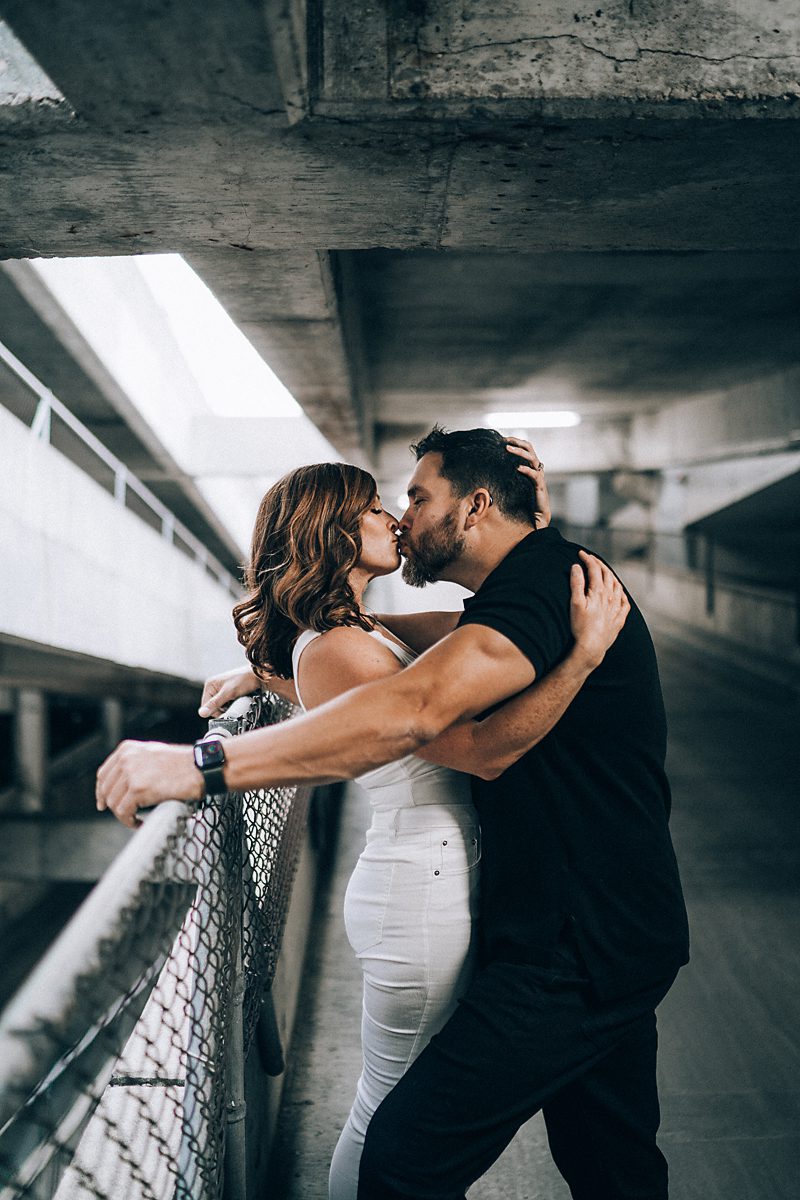
America’s Favorite Couple 2025: Winner, Contest Recap + Our Experience
June 30, 2025
If you landed here searching for the America’s Favorite Couple 2025 winner, contestants, rankings, or how the competition worked, you’re in the right place.
René and I competed in America’s Favorite Couple in 2025. What began as a slightly impulsive why not? decision eventually carried us through the Group Finals and into the Quarterfinals, where we finished eighth in our group.
I originally created this page while the competition was still happening so friends, family, and anyone following along could keep up with us. Since then, something unexpected has happened: people have continued finding it long after our own run ended. Some are looking for the winner. Others are trying to understand the rounds, the voting, the Quarterfinals, or what it was actually like to participate.
So I’ve updated the article to preserve both sides of the story: the factual 2025 contest information people are searching for and our firsthand experience being part of it.
And underneath all of that is the story that existed long before anyone started voting for us — two people who met on Bumble in their 40s, went for coffee, blended a family, navigated a Deaf-hearing relationship, and somehow ended up competing for the title of America’s Favorite Couple.
Looking for America’s Favorite Couple 2026?
This page covers the 2025 competition and our experience competing in it.
The 2026 competition is separate. Voting for the 2026 Finals ended September 10, and the official rules state that the Grand Prize Winning Couple is expected to be announced on or around October 9, 2026.
Who Won America’s Favorite Couple 2025?
Jennie and Bryan Drollinger, known as The Drollingers, won America’s Favorite Couple 2025. Their prize included $20,000 and a Variety advertorial, and the competition reported raising nearly $4 million in support of its charitable beneficiaries.
René and I were not finalists. We won our Group Finals and advanced to the Quarterfinals, where we ultimately finished #8 in our group. Only the couple ranked #1 advanced from that stage, so that was the end of the competition for us.
At the time, of course, we were watching every ranking change and wondering how far this strange little adventure might go. Looking back, though, I’m glad this page became more than a campaign asking people to vote for us. It now gives other contestants and curious readers something I would have appreciated having when we were in the middle of it: a firsthand account from someone who actually went through the process.

How America’s Favorite Couple 2025 Worked From Our Side
America’s Favorite Couple moved through a series of elimination rounds based on public voting. There were free votes, as well as additional votes connected to donations, and rankings could change considerably as each round progressed. When a new stage began, the field narrowed and the competition essentially started moving again among a smaller group of couples.
René and I chose to rely on free votes, sharing, and the people who genuinely wanted to support us. That was simply the way we felt most comfortable participating.
As the rounds progressed, the process became harder to follow from the outside. Once we reached the Quarterfinals, even figuring out who else was still competing was surprisingly difficult. There wasn’t one simple public page showing the entire remaining field in a way that was easy to scan.
Naturally, my dad responded to this problem by making a spreadsheet.
He began collecting publicly available competition information and eventually compiled nine of the fourteen Quarterfinal groups, representing much of what we estimated was a 196-couple Quarterfinal field. It was never an official document, and it was not complete, but it became one of the most useful resources we had while trying to understand where things stood.
2025 Quarterfinal Archive
Want to see who made the Quarterfinals?
My dad pulled together a custom spreadsheet showing 9 of the 14 Quarterfinal groups from America’s Favorite Couple 2025 — part of a field that included 196 couples in total.
It is not a complete or official competition list, but it offers a useful snapshot of much of the 2025 Quarterfinal field without clicking through hundreds of individual pages.
View the 2025 Quarterfinal Spreadsheet →Community-compiled from publicly available competition pages during the 2025 Quarterfinals. Not an official America’s Favorite Couple document.
When we eventually finished eighth in our Quarterfinal group, our run was over. Of course winning $20,000 and appearing in Variety would have been fun, but by that point the experience had already become memorable for reasons that had very little to do with the prize.
People we knew were sharing our story with people we didn’t. Strangers were sending messages because something about our relationship reminded them of their own lives. Some connected with finding love later. Others had Deaf family members or experience with Deaf-hearing relationships. And some people were simply invested in watching two ordinary people they had never met see how far this thing could go.
That part surprised me.


The Story We Brought Into the Competition
Long before America’s Favorite Couple, there was a coffee shop.
I was 42 and had been a single mom for years when I cautiously decided to try Bumble. René had considerably more experience navigating online dating than I did. We matched, made plans to meet at The Wild Bean, and sat down for what was supposed to be a simple coffee date.
I had only met one other person from the app before him.
René became my last first date.
Dating While Deaf
René is Deaf. He speaks, lip-reads, signs, relies heavily on visual cues, and has spent his life navigating communication in a hearing world. He had not mentioned being Deaf before our first date, so I figured it out fairly quickly once we were sitting across from each other.
What struck me that day wasn’t what he couldn’t hear. It was how present he was.
He positioned himself where he could see me clearly, paid attention, asked thoughtful questions, and stayed engaged in the conversation. We sat there talking for about 90 minutes, and nothing about it felt complicated.
It wasn’t until later that I learned more about what dating had been like for him.
For a period of time, René had identified himself as Deaf directly on his dating profile. His experience was that matches dropped noticeably and that people often seemed to make assumptions before they ever had a conversation with him. Eventually, he removed that information from the profile — not because he was ashamed of being Deaf, but because he wanted someone to meet him before deciding what communicating with him might be like.
He also told me about first dates where someone discovered he was Deaf, excused herself to use the restroom, and never returned.
More than once.
Hearing those stories later made me understand more about what our first date had required from him. He showed up knowing there was always a possibility that someone might make a quick judgment and leave. I’m glad neither of us did.
How We Communicate Now
Communication in our marriage has never been one thing. René speaks. He lip-reads. We use signs, texts, gestures, facial expressions, and whatever else gets the job done.
We have also developed the kind of shorthand that comes with years together. I know when he needs me to turn toward him before I start talking. He knows when I have forgotten and started an entire conversation from another room. Sometimes one of us misunderstands the other completely and we laugh.
It is not especially profound from the inside.
It is just our marriage.
Eye contact matters. Attention matters. Context matters. And occasionally it matters very much whether René is nodding because he understands what I’m saying or because he has absolutely no idea what just came out of my mouth.
In this video, I answer some of the most common questions we get about our daily conversations. You’ll see how we navigate communication with a blend of speech, visual cues, humor, and intentionality.
From Our First Coffee Date to a Wedding We Never Planned
Exactly one year after our first date, René took me back to The Wild Bean.
This time our kids were there too.
And this time, he proposed.
The children quietly recorded it while the coffee shop where our relationship had started became part of the story all over again. It wasn’t elaborate or highly produced, and that was part of what made it feel right for us.
Proof Bumble Works — by Shannon OMalley
Where it started: The Wild Bean, the location of our first coffee date.
We later planned a destination wedding in Mexico. The clothes were bought, the venue was booked, and everything was moving along exactly as expected.
Then 2020 happened.
Flights disappeared. Borders closed. Our carefully planned wedding became one of countless events suddenly sitting in limbo, with no clear answer for when the original plan would be possible again.
So we changed it.
Instead of waiting indefinitely, we married in Minnesota with a small group of family members around us. It was quieter, smaller, and completely different from the wedding we thought we were going to have.
It was also completely ours.


Years later, when America’s Favorite Couple appeared in our orbit, we already had plenty of story behind us. We had met after 40, figured out communication across two very different worlds, blended a family, pivoted through a pandemic wedding, and settled into ordinary married life.
Entering a national couples competition was not something we had been building toward.
We simply looked at it and thought, why not us?
What Happened Once People Started Finding Us
The further we advanced, the more our story traveled beyond people we actually knew.
Messages started arriving from strangers. Some were dating after divorce or wondering whether meaningful relationships were still possible later in life. Others had personal connections to Deafness and recognized parts of René’s experience. A few were simply curious about how the competition worked.
That last group never really went away.
Even after our own run ended, people continued finding this article through searches about the America’s Favorite Couple winner, standings, Quarterfinals, contestants, voting, and whether the competition was legitimate.
In 2026, contestants in the new competition even found this page while trying to understand what happens after the earlier rounds.
That was when it became obvious to me that the article had developed a second life.
It was no longer only our competition page. It had become a small archive of what the 2025 experience looked like from inside it.
Was America’s Favorite Couple Legit?
This became one of the biggest questions surrounding the competition.
Yes, America’s Favorite Couple was a real competition operated by Colossal. The official site documented the eventual winner, finalists, prize structure, fundraising beneficiaries, and contest rules.
That does not mean every participant experienced every part of the format in exactly the same way or loved every mechanic involved. Voting competitions can feel intense, especially when free votes and donation-based votes exist in the same system. Rankings move quickly, new stages reorganize the field, and participants are often learning how the process works while they are already inside it.
Our approach was simply to participate in the way that felt right to us. We shared our story, asked people to support us with their free votes, and let the ranking land where it landed.
For us, that ended at #8 in the Quarterfinals.
And that was okay.
What America’s Favorite Couple 2025 Taught Us
The leaderboard eventually disappeared from our daily lives, but a few things stuck with me.
We nearly scrolled past the competition entirely. Instead, one spontaneous decision turned into weeks of friends, family, clients, and complete strangers following along with us.
The parts people responded to most were not polished or impressive. They were the details: René’s experiences dating while Deaf, our first coffee date, our kids being there when he proposed, the wedding we had to completely rethink, and the ordinary process of building a life together.
That was probably the biggest reminder for me.
Stories become interesting because they are specific.
We did not win America’s Favorite Couple 2025, and I don’t need to rewrite the ending to make the experience meaningful. We reached the Quarterfinals, finished eighth in our group, met people we otherwise never would have known, and gave my dad an excuse to create what may be the most aggressively organized couples-contest spreadsheet on the internet.
That is a perfectly good ending.
America’s Favorite Couple 2025 FAQ
Jennie and Bryan Drollinger, The Drollingers, won the 2025 competition. Their prize included $20,000 and a Variety advertorial.
We won our Group Finals and advanced to the Quarterfinals, where we finished #8 in our Quarterfinal group. Only the first-place couple advanced from our group.
The competition offered free voting as well as additional votes associated with donations. The official rules restricted competitors and their partners from using their own funds to cast donation votes for themselves.
No. We won our Group Finals and advanced to the Quarterfinals. We ultimately placed eighth in our Quarterfinal group and did not advance to the Semifinals.
No. We relied on free voting and people sharing our story.
Yes. The 2026 competition is separate from the one documented on this page. Its Finals ended in September 2026, with the winner expected to be announced according to the official 2026 competition schedule.
Because I wrote it while René and I were actually competing.
Since then, it has unexpectedly become a resource for people researching the competition. There is also a small connection to the work I do today: René and I met on Bumble when I was 42, long before my photography business became so focused on dating-profile photography and visual first impressions.
I don’t present our marriage as proof that an app, photograph, or strategy can create a relationship. It is simply part of my own story — and one reason modern dating is a world I understand from more than one side.
One Last Thank-You
If you voted for us, shared our page, followed the rankings, sent the link to someone else, helped us make sense of the Quarterfinals, or texted one of those wonderfully enthusiastic YOU GUYS ARE STILL IN IT! messages, thank you.
What started as a quirky online competition became much more fun because people showed up for us.
And yes, an especially deserved thank-you still goes to my dad, who apparently looked at a national couples competition and decided what it really needed was a spreadsheet.
René and I did not become America’s Favorite Couple 2025.
We remained what we already were: two people who met later than expected, learned how to communicate across two different worlds, blended a family, changed plans when life demanded it, and said yes to something strange just to see what would happen.
Making it to the Quarterfinals gave us plenty to celebrate, laugh about, and learn from. Somehow, long after the leaderboard disappeared, the story is still bringing people here.
I’ll take that.


Dallas-based dating profile photographer + profile strategist and founder of Shannon Kathleen Photography, creator of Dating Photos That Work™. Shannon specializes in dating profile photography, visual first impressions, photo strategy, photo selection and order, and natural portraiture designed to feel current and genuinely representative of the person being photographed.
Her work has been featured by CBS/WCCO, CNN Newsource, Bella Grace Magazine, Rangefinder, and other media outlets. She serves Dallas–Fort Worth year-round, with occasional Twin Cities dates + travel by request.
More About Shannon →